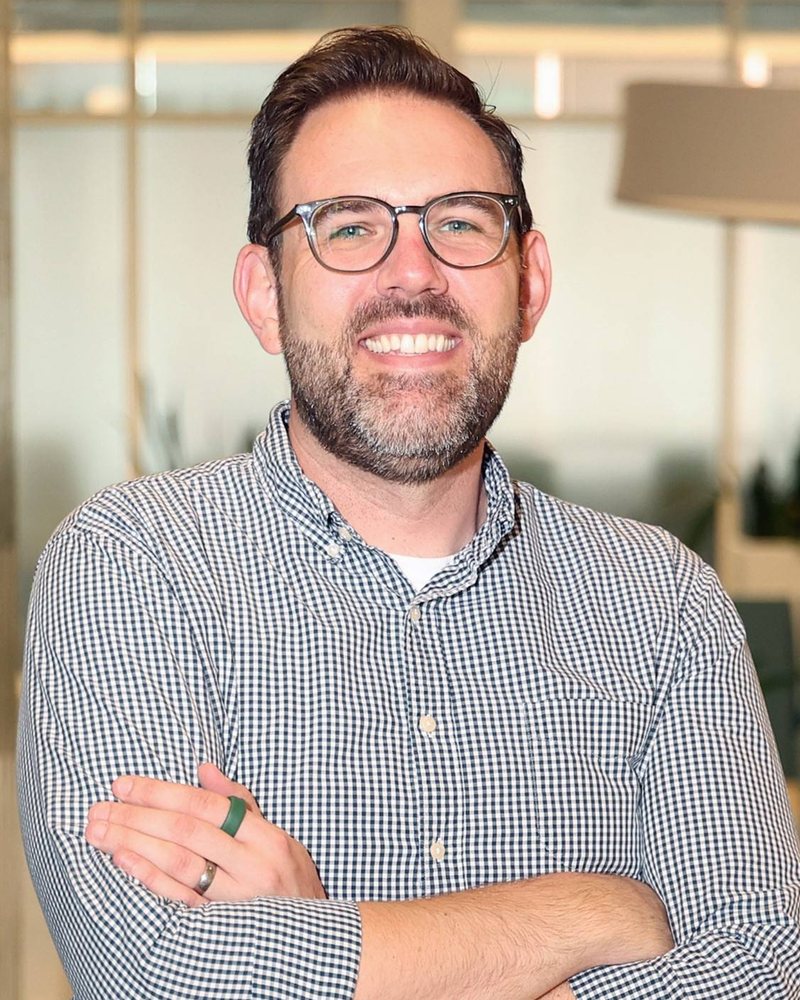
Clinical biomechanist · Athletic trainer · University of Virginia
Christopher Kuenze
PhD, ATC, FNATA
I study how adolescents and young adults recover after ACL reconstruction, and what it takes to help them return to sport and stay active and healthy for the decades that follow.
Recovery after ACL reconstruction is more than a return-to-sport date
Our work takes a biopsychosocial view of recovery. We connect how patients move with how they think and feel about their knee, how active they are, and how healthy their joints and hearts are years later.
01 · Movement
Biomechanics and strength
Landing and gait mechanics, quadriceps strength, and rate of torque development, measured in the lab and with force-sensing insoles.
02 · Mindset
Psychological response
Injury-related fear, kinesiophobia, and readiness to return, and how they shape both movement and activity.
03 · Activity
Physical activity
Device-measured activity with wearables, and the barriers that keep patients less active after surgery.
04 · Long-term health
Joint and heart health
Early knee osteoarthritis symptoms and cardiometabolic health in the years after ACL reconstruction.
The ACL Reconstruction Rehabilitation Outcomes Workgroup is a national multisite registry of more than 4,000 patients. I direct ARROW, which pools return-to-sport testing data across 15 sites to build age-, sex-, and graft-specific reference values.
The Dashboard for ACL Reconstruction Testing (DART) lets clinicians compare a patient's return-to-sport testing results to ARROW reference data by age, sex, time since surgery, and graft. Patient data is never stored.
Intense, small-group exercise that bridges the gap between physical therapy and a return to sport and activity after ACL reconstruction or another knee procedure. Supported by the Jefferson Trust.
I co-direct the Exercise and Sport Injury Laboratory at UVA, where our team measures strength, movement, balance, and function in athletes and patients.
Free, browser-based tools for teaching biomechanics and research methods, plus research writing and data management helpers. Each runs in a web browser with nothing to install.
An interactive map of everyone I have published with since 2008. Watch it grow year by year, find who I have worked with most, and spot the doctoral students at its center.
Christopher Kuenze, PhD, ATC, FNATA, is an Associate Professor with Tenure in the Department of Kinesiology at the University of Virginia and an Associate Professor, by courtesy, of Orthopaedic Surgery. He is also a consultant at Inova Health. He co-directs the Exercise and Sport Injury Laboratory (EASIL) and directs the ACL Reconstruction Rehabilitation Outcomes Workgroup (ARROW), a national multisite registry of more than 4,000 patients. His research integrates biomechanics, psychological factors such as injury-related fear, and wearable physical activity monitoring to improve long-term outcomes for adolescents and young adults after ACL reconstruction.
Dr. Kuenze has authored more than 130 peer-reviewed publications. He is a Fellow of the National Athletic Trainers' Association, chairs the NATA Research and Education Foundation's Free Communications Committee, and serves as an Associate Editor of the Journal of Athletic Training.
EducationPhD, University of Virginia · MA, UNC Chapel Hill · BS, Boston University
Before UVAMichigan State University (2015–2022) · University of Miami (2013–2015)
HonorsNATA Fellow (2024) · ACSM Biomechanics Interest Group Midcareer Award (2026)